
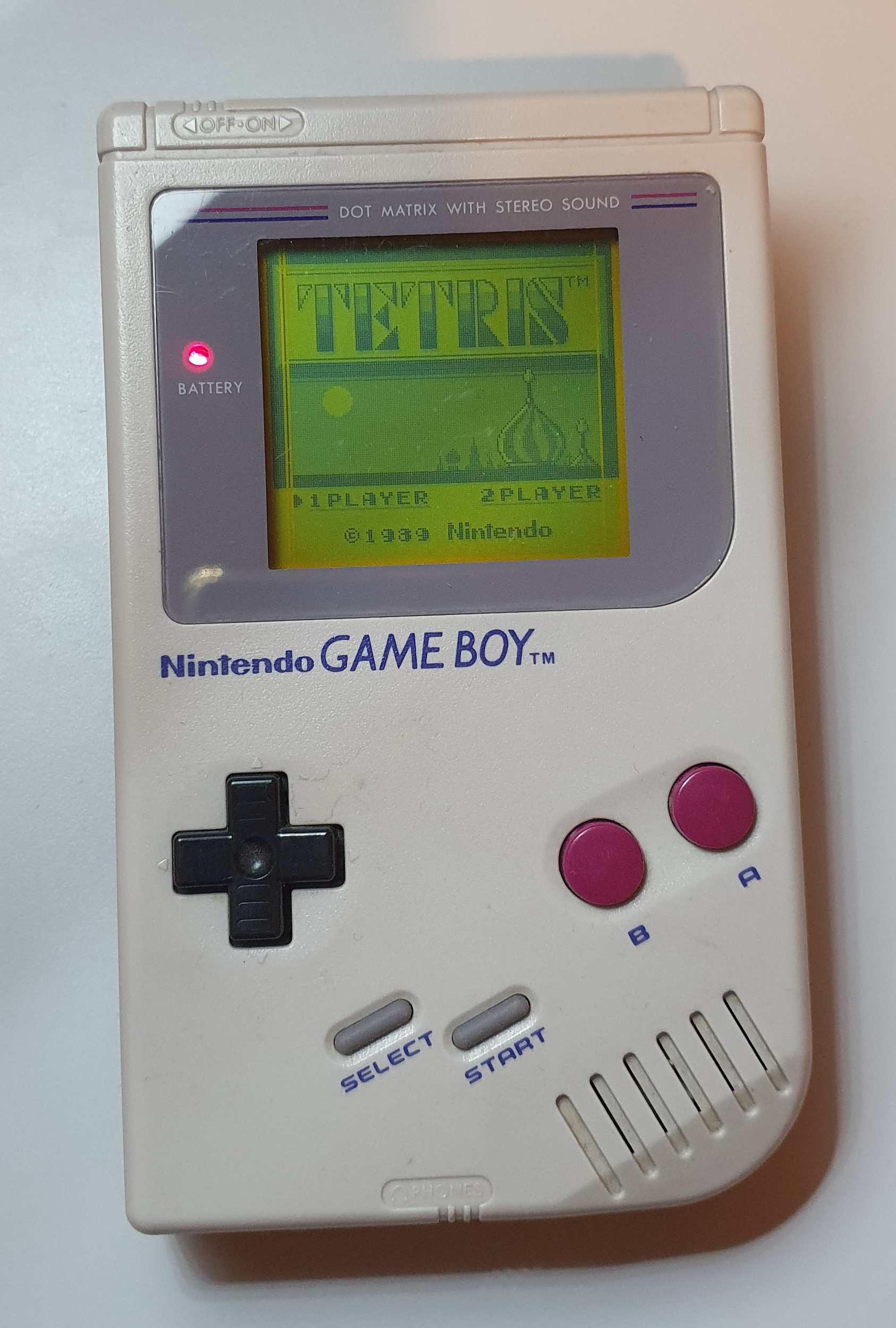
Nintendo Game Boy
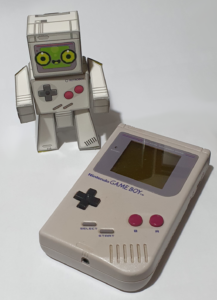
Before the Game Boy, hand-held games consoles tended to be single-game affairs with specialised LCD screens. Nintendo’s own Game & Watch series were one of the most well known and Tomy were quite prolific, too.
Nintendo released the Game Boy in 1989. It wasn’t the first cartridge based hand-held games console, but it certainly popularised the format. Wikipedia has a page listing all the handheld consoles.
The Game Boy went on to sell over 118 million units before Nintendo released the backward compatible Game Boy Color (yes this is how it was spelt in the UK) which also went on to sell over 118 million units. Subsequent revisions then went on to sell in almost as huge numbers.
Hardware
The screen of the original Game Boy was a 2.5inch reflective LCD screen with 160×144 pixels and 4 shades of grey.
Having no back light makes the screen impossible to use in dim light an it’s also a bit smeary – although I suspect games mostly took this into account.
There was at least one add-on that provided a magnifier and a light for the screen making the thing look really ugly.
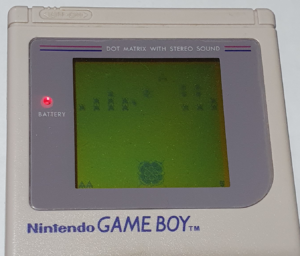
The screen is driven by a dedicated Picture Processing Unit with its own 8K RAM.
The Game Boy has a reasonable built-in mono speaker and a stereo headphone jack. It can play four channels, including white noise and short samples. It has 128bytes of dedicated audio RAM.
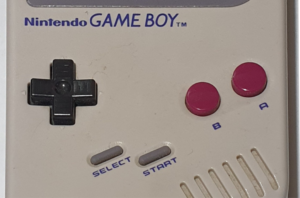
To control a game, you have a D-pad with 4 directions, an A and B button and Select and Start buttons.
The buttons feel good to use, but the D-pad is not analogue.
The processor in the Game Boy was a custom 4MHz Intel 8080/Zilog Z80 hybrid by Sharp called the SM83. It combines this with 8K of working RAM, 127bytes of fast high memory, and 256bytes of bootstrap ROM. The Wikipedia page has more detail.
The software is almost entirely on the cartridge, up to 1M ROM and 128K RAM. This would be battery backed RAM to save game state. Flash memory was not a thing at this time (certainly not an affordable thing).
Summary
- Sharp SM83 Processor (Zilog Z80/Intel 8080 hybrid) @ 4MHz
- 256 bytes bootstrap ROM
- 8K working RAM and 127 bytes of fast upper RAM
- cartridge slot allows for 1M ROM and 128K RAM
- 2.5inch reflective LCD screen with 160×144 pixels and 4 shades of grey and 8K video RAM
- four channels of stereo sound, including white noise and short samples, built-in mono speaker and a stereo headphone jackand 128 bytes of dedicated audio RAM
- controls constitute a D-pad with 4 directions, A, B, and Select and Start buttons
- 4x AA batteries
Subsequent models
The Game Boy Pocket came next in 1996, seven years later. It was fully compatible with games made for the original as were all its successors except the Micro, which is only compatible with Game Boy Advance games. The Game Boy range consists of:
- Game Boy
- Game Boy Pocket
- Game Boy Color
- Game Boy Light
- Game Boy Advance
- Game Boy Advance SP
- Game Boy Micro (this is the exception for backward compatibility)
Game Boy Advance game cartridges can also be played in the Nintendo DS. The slot was finally removed on the DSi and DSi XL.
Linking Game Boys together
The original Game Boy came with a port labelled Ext. Connector.
This connector can be used to connect to up to 4 Game Boys together. Two can be plugged into each other nut a multi-tap must be used for more.
Playing multi-player games on the Game Boy, however, requires that each Game Boy has a copy of the game.
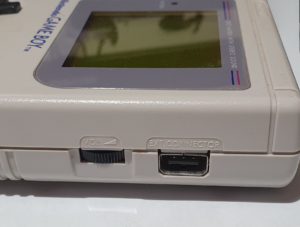
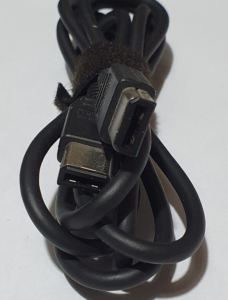
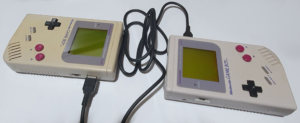
The connector is a different design on the Advance/Advance SP and Micro, although adapters are available.
Nintendo released a thermal printer that uses the ext. connector port. Wikipedia has details.
Game cartridges
Games for the Game Boy were released on cartridge. Originally cartridges only contained one game each, although I have one that has both Galaga and Galaxian on it.
When the Game Boy Color was released, an extended version of the game cartridge was released for colour games. These are not always playable on the original Game Boy although there are some which are compatible with both.
The cartridge for the Game Boy Advance (and SP) has the same connector again, but these are shorter cartridges and will therefore not fit in older machines. They also have a cutout on the bottom edge sides of the connector. This cutout lets the console detect the newer cartridges. The original and Color cartridges will fit the slot on the Advance/SP but will protrude.
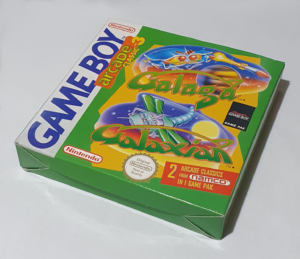
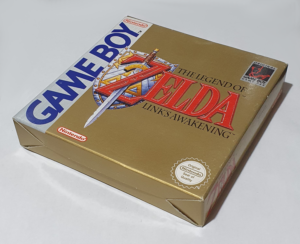
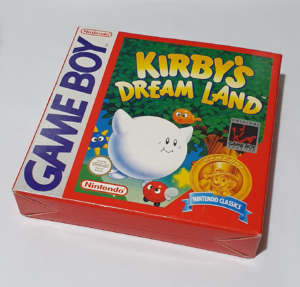
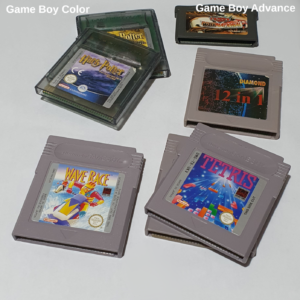

In summary, any Game Boy games cartridge will play on a newer console – the only exception being the Game Boy Micro which will not play original or Color games. Some Color cartridges (usually black ones) will play in an original Game Boy (albeit not in Color) – look for the notch cut out of the top corner.
When the original Game Boy was released outside of Japan, it came bundled with Tetris. This is a fantastic version and the two player mode is particularly good.
Multi-game cartridges eventually came to the Game Boy. These are not official Nintendo licensed cartridges! In the modern day, you can even get cartridges which take SD cards. The original device was the Everdrive and knock-offs, like the GB Pro+, now exist.
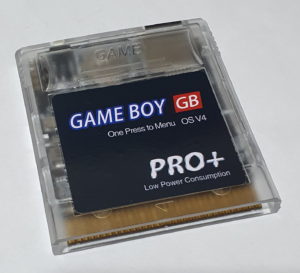
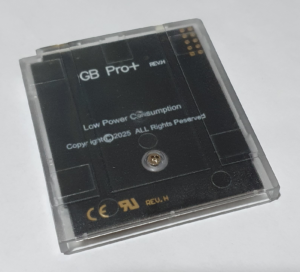
There are multi-carts that are the shorter Game Boy Advance style that can run original and Color games. Since these carts have the cutouts they have to run non-Advance games in an emulator which is not necessary for original and Color cartridges as the Advance has the hardware capable of running those games natively.