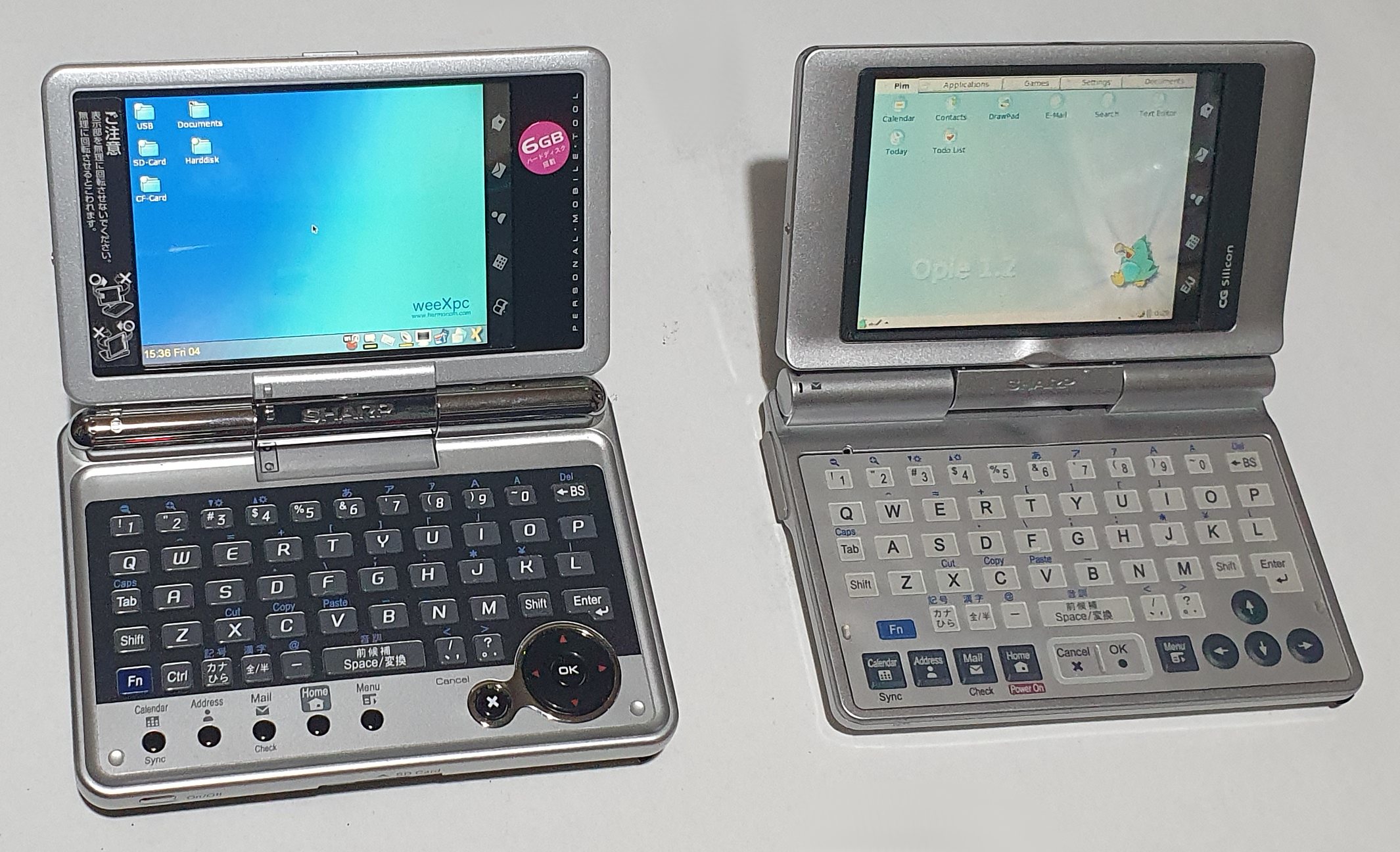
Sharp Zaurus SL-C860, SL-C3200
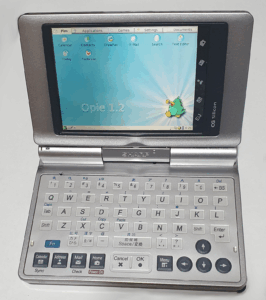
Sharp created a range of handheld computers under the Zaurus name. According to Wikipedia, the Zaurus line was started in 1993 as the successor to their Wizard PDAs and early models ran a proprietary OS. These examples run Linux – installed by Sharp themselves. These are both clamshells and I also have a SL-5500 which is of a notepad-style.
Hardware
In 2004 I owned a Zaurus SL-5500 and I liked it. So much so that I sold it in order to upgrade to a better device, the SL-C860. I sold my SL-5500 at the time to help finance the upgrade, which had to be don from from Japan through Shirt Pocket (only available now through The Wayback Machine). I have since bought one off Ebay.
Their design is that of a small clamshell, in which the screen can rotate and flip back down, in the old 2-in-1 style, to make a palm-pilot style tablet device.
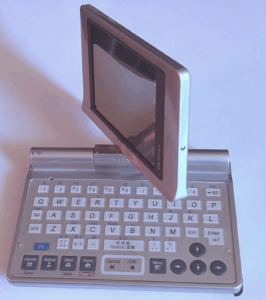
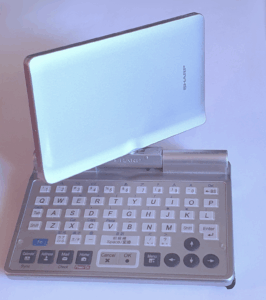
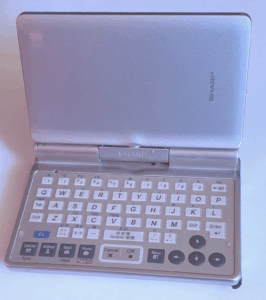
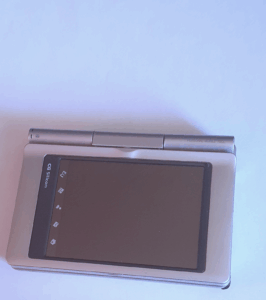
Both Zaurii (is that the right word?) have 64MB RAM and 128MB flash disk and can both be expanded with Compact Flash and full size SD flash media. The SL-C3200 also has an additional 6G hard disc!
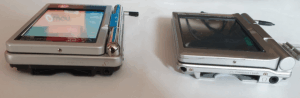
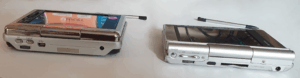
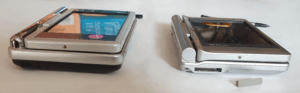
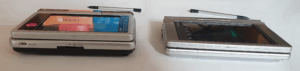
Both have a full qwerty keyboard with external jog-wheel, OK and cancel buttons. They also both have headphone jacks. And the screen on each is a 640×480 pixels in full colour with a resistive touch digitiser.
The two SL-C palmtops I own are about the same size, apart from their thickness. With the normal 950mAh battery, the SL-C860 is about half a cm thinner than the SL-C3200. However it comes with an alternative long life 1700mAh battery (the same one as the SL-C3200) and an extended back which makes it only a mm or so thinner.
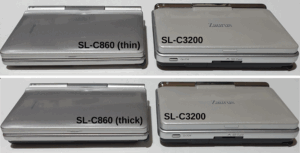
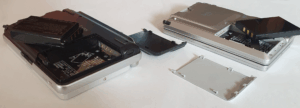
Despite their age (a little over 20 years), all the batteries are in fairly good condition.
Summary
| SL-C860 | SL-C3200 | |
|---|---|---|
| CPU | IXscale PXA255 @ 400MHz | Xscale PXA270 @ 416MHz |
| RAM | 64 MB | 64 MB |
| Internal storage | 128 MB flash | 128 MB flash, 6 GB hard disk |
| Display | 640x480px full colour, resistive touch screen | 640x480px full colour, resistive touch screen |
| Ports | Sharp I/O, IrDA, Headphones | Sharp I/O (for debug only), IrDA, Headphones |
| Card slots | SD, CF | SD, CF |
| Keyboard | QUERTY keyboard, dedicated Calendar/Address/Mail/Home, Menu and OK/Cancel buttons | QUERTY keyboard, dedicated Calendar/Address/Mail/Home, Menu and OK/Cancel buttons |
| External buttons | OK/Cancel, Jog-wheel, Power button | OK/Cancel, Jog-wheel, Power button |
| USB | Through Sharp I/O port | Mini USB port |
| Battery | 3.7V 950mAh (1700mAh) | 3.7V 1700mAh |
Software
The Operating System on the SL series Zaurii (still not sure if that’s the right plural) shipped with was Embeddix-plus. This is a Linux distribution based on the Qtopia desktop. It features all the usual PIM applications: email, calendar, contacts etc. It runs X11 as its user interface and has full TCP/IP capability – applications can run over X just like any other POSIX distribution (such as Linux and BSD).
The support for Linux on the devices was excellent at the time, many applications were pre-compiled for it, but the GCC compiler and tools were readily available meaning many other applications could be compiled for it.
Other distributions were also available for the Zaurus machines: I installed OpenZaurus on my SL-C860 (which was subsequently consumed into Angstrom before being discontinued). My SL-C3200 came to me installed with hermocom weeXpc 3200 (apparently based on pdaXrom).
Connecting the Zaurii to another machine can be done in any way you’d connect any Linux machine to another, although Sharp provided a program called intellisync to help with that. A WiFi card could be inserted into the compact flash card slot to make the Zaurus a fully wireless device, even capable of browsing the Web. A bluetooth card could alternatively be used to connect it to a mobile phone or similar.
Repairs etc.
The SL-C850 in my possession I originally purchased as a replacement for my SL-5500 in 2004, which I sold on. I had to get it imported from Japan by Shirt Pocket as the machine was not available elsewhere in the world unlike the SL-5500. The manual that came with the SL-C860 is only in Japanese but Shirt Pocket provided a brief help guide in English. They also included a UK charger.
The SL-C3200 is a different matter, though. That I bought in 2025 from Ebay. I don’t have the manual or an official charger (if a non-Japanese one even exists). It’s in immaculate condition though, just like my SL-C860.
Neither machine has had a problem – even the batteries are still in good condition in 2025.
Summary
The SL-C series of Sharp Zauruses (is that any better than Zaurii?) are of very similar design and size to each other. The size is a little on the small size but plenty high enough resolution for the software. You do need pretty good eyesight though.
All of them run a similar, if not the same operating system and set of applications by default. This alone makes the machines more than usable as PDAs. However, that’s only the beginning as they are full Linux computers with all that entails. If you install a WiFi or Bluetooth CF card then they’re very powerful little computers.
To-Do
- So much possibility….