Media Formats
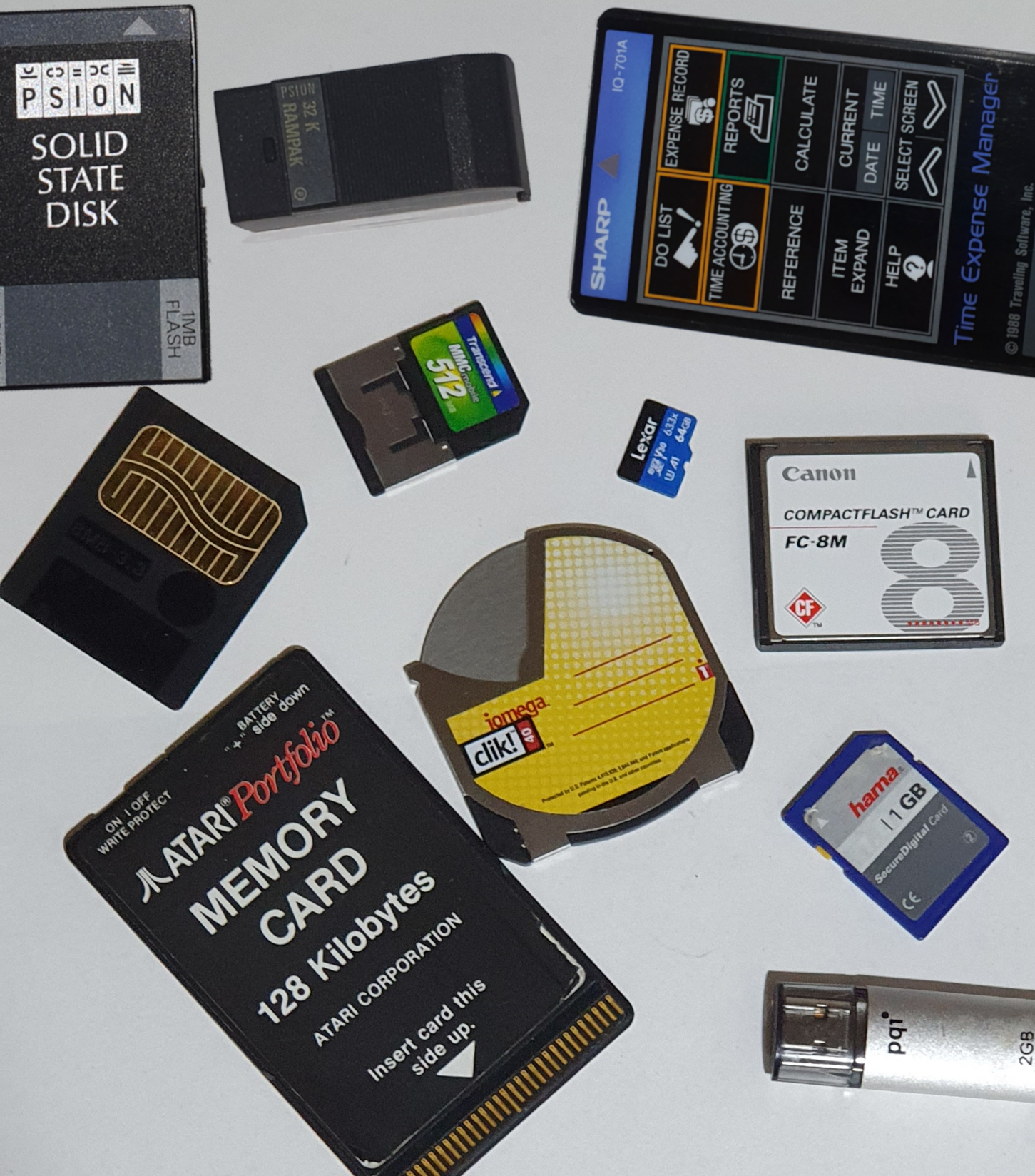
Today, there are only a very few types of media that are used, USB and SD being the most well known. This was not always the case. I don’t own many of the more rare formats, and certainly nothing before the 1980s. What I do have, I thought I’d list here…
- 3.5 Inch Floppy Disk (1982)
- Psion Datapak (1984)
- Cambridge Z88 (1987)
- Nintendo Gameboy Cartridge (1989)
- Sharp IQ7000 Series Memory/Program Card (1989)
- Atari Portfolio Memory Card (1989)
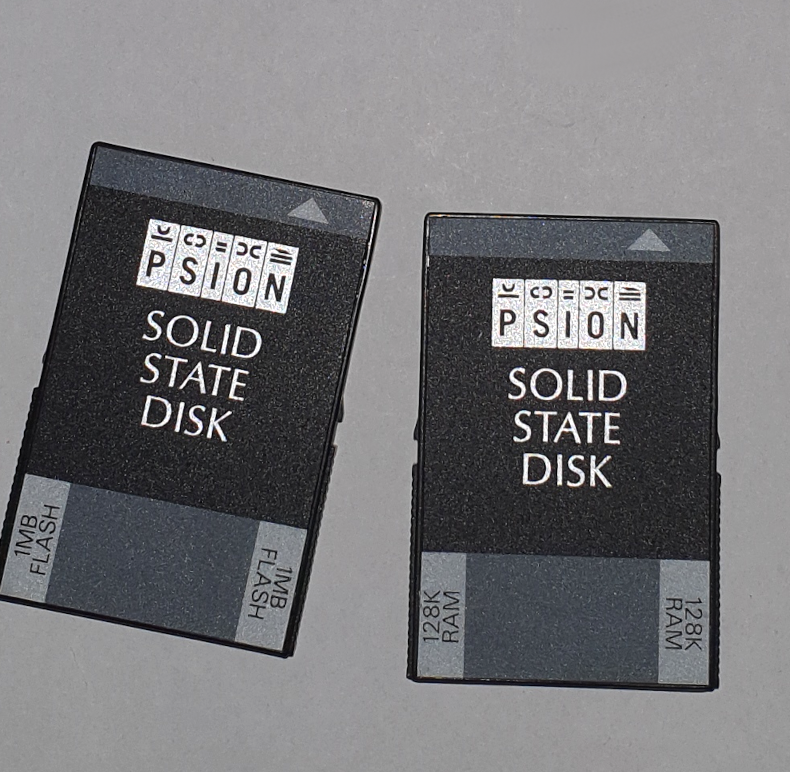
- Psion SSD (1991)
- Sony Playstation Memory Card (1994)
- CF Memory Card (1994)
- Iomega Zip (1994)
- SmartMedia (1995)
- Nintendo 64 Cartridge (1996)
- MMC Memory Card (1997)
- Sony Memory Stick (1998)
- Sega Dreamcast VMU (1998)
- Iomega Clik! (1999)
- SD Memory Card (1999)
- USB Flash Drive (2000)
- xD Picture Card (2002)
- Sony UMD (2004)
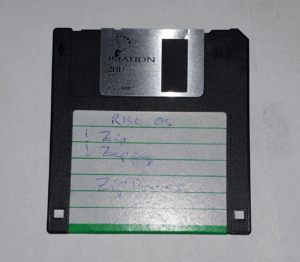
3.5 Inch Floppy Disk (1982)
The 3.5 inch floppy disk (invented by Sony) was not the first floppy disk, nor the last. It was, however, by far the most ubiquitous. At its peak, almost every current computer had a 1.44MB drive. By modern standards, that’s pretty small, but when it was first used, they were much smaller. Newer drives were developed in the same form factor allowing for higher capacities but they didn’t take off.
The floppy diskette form factor has undergone some revisions and many manufacturers tried their hand at a format or two. Only two of them really stood out: the 7 inch and 5.25 inch.
The 7 inch floppy was truly a floppy – it was bendy – and the 5.25 inch was pretty much a cut down version of it. The 3.5 inch was quite a departure, though. It came in a rigid outer shell with a spring-loaded shutter to protect the magnetic media inside from greasy fingers and accidental creasing.
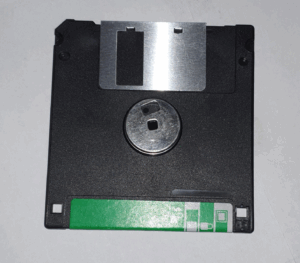
Floppy disks have gone the way of the dinosaurs, though. You can still find the three big formats quite easily, but none of them is being manufactured any more – the media or the drives. They are getting more expensive and less reliable all the time.
In order to mitigate this, there are such things as floppy emulators – the most well known being the Gotek. This is often packaged in the same size case as a 3.5 inch drive, but since the interface is almost the same, it can emulate a 5.25 inch drive too. I believe a 7 inch is also possible since the cabling standard is pretty much the same.
Psion Datapak (1984)
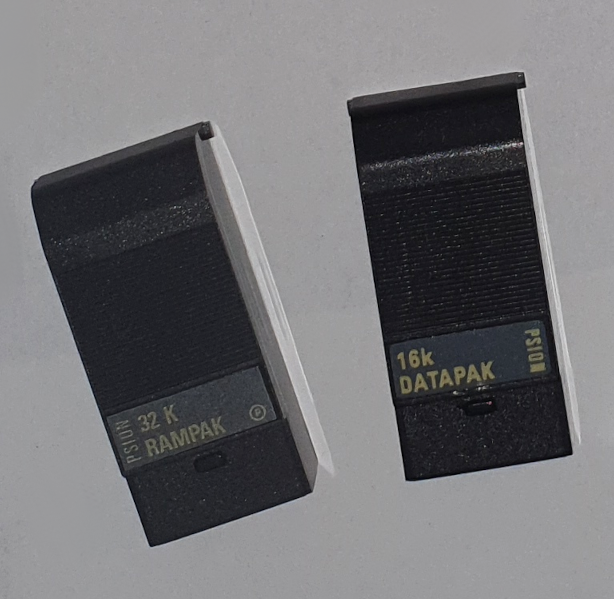
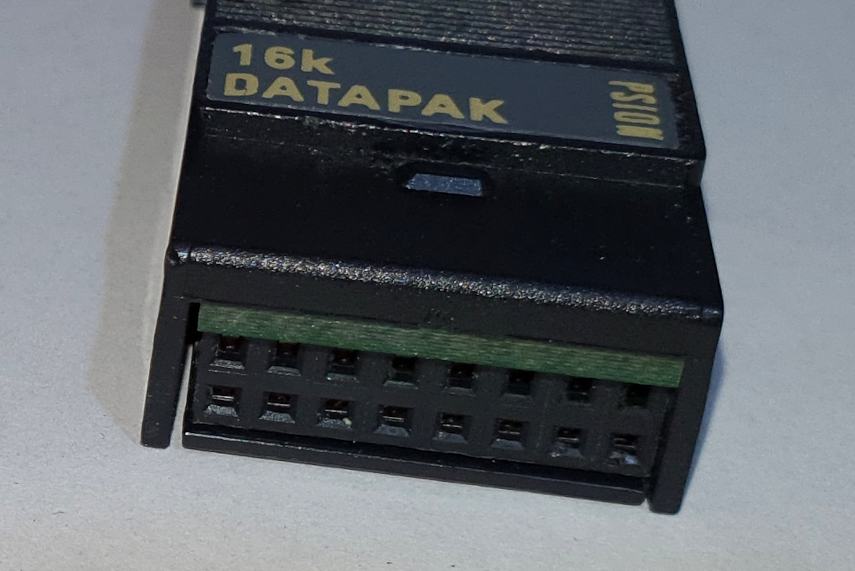
In the 1980s and 1990s, a standard for memory cards hadn’t established itself, so many manufacturers came up with their own. Psion was no different. The Datapak was used in their Organiser and Organiser II.
The most popular of the Datapacks were based on EPROMs, being the cheapest mass storage medium at the time. This meant that the machine had to supply programming voltages in the region of 12.5V as well as the more common 5V needed to read the data stored on the device. To write data was one thing, but to erase data was more complicated – for that you had to expose the EPROM to UV light for about 20 minutes. This limitation meant that Psion had to devise its file system cleverly. Data was stored in blocks, and as blocks were updated, they were marked as not used and a new block would be used in its place, thus cards would have a limited write life expectancy, until the Datapak was removed and erased under UV light.
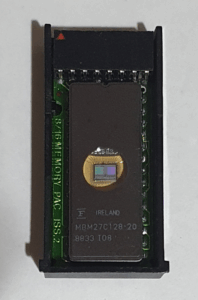
As well as EPROM based Datapaks there were RAM ones (backed by a battery to keep the data alive when removed) and later FLASH based – although I don’t have one of these since I haven’t actually seen one for sale. Software was also distributed on Datapaks.
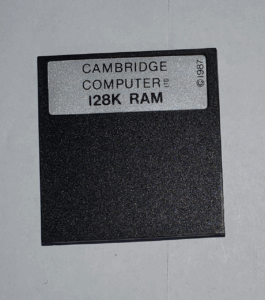
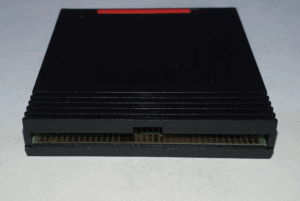
Cambridge Z88 Memory Card (1987)
During the time of “do it yourself” memory cards, Cambridge Computers (one of the few Sinclair companies without Sir Clive’s name) designed their own card format. As far as I know, it was only used on the Z88.
There were more than just RAM cards, apparently flash and EPROM cards also exist, although I haven’t seen any of them.
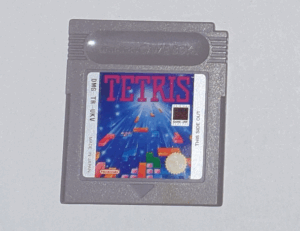
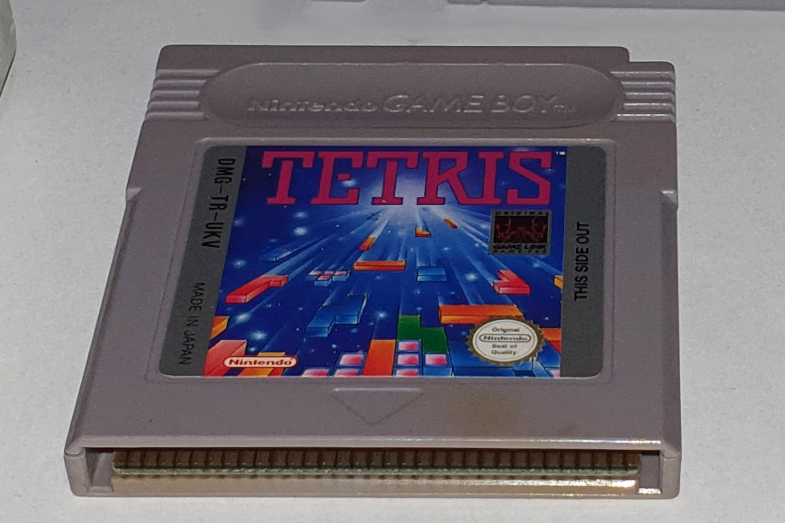
Nintendo Gameboy Cartridge (1989)
Cartridges were the earliest form of storing games on consoles (and sometimes computers). Although, before that games consoles just had a small number of very basic games stored inside the console itself. They weren’t really programs back then, as consoles tended to have discrete logic rather than an actual processor.
After cartridges came optical media: CDs, DVDs and Blu-Ray discs. Modern consoles tend to have built-in storage and games are mostly downloaded from the internet – optical media still exists but is on the way out. The Nintendo Switch is about the only modern console (as of 2025) that still uses cartridges.
The cartridges for the Gameboy, like cartridges for nearly all consoles, were specific to that particular hand held console. Mostly. In this case, the Gameboy had such a huge following that other consoles followed it and had compatibility with it. For example, you could use Gameboy cartridges in the Gameboy Color, Gameboy Pocket or Gameboy Advance/Advance SP.
Sharp IQ-7000 Series Memory/Program Card (1989)
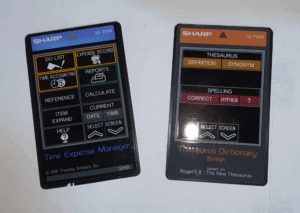
The IQ-7000 was one in a line of handheld organiser-like devices made by Sharp. I have a IQ-7000 and IQ-7200 (which is the same with more memory). The cards were only used in a small number of models.
The card plugs into the IQ-7000 device and shows a set of touch-buttons through a window – the touch interface is part of the window and not on the card.
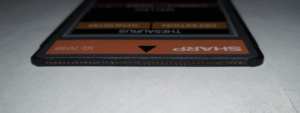
The card is exactly the same horizontal/vertical size as a PCMCIA card or Portfolio card, although it is quite slim.
Atari Portfolio Memory Card (1989)
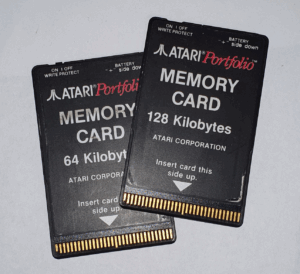
The Portfolio was made by DIP and licensed by Atari. It doesn’t feature much in the way of expandability – just the memory card slot and an expansion connector for everything else.
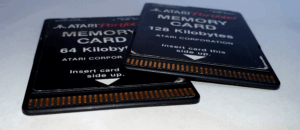
The memory cards are the same size as those for the Sharp IQ7000 series of machines, which are the same size as PCMCIA cards, just thinner. The cards I have are all battery-backed RAM cards, although I believe there were read-only ROM cards too. Since the machine runs DOS, it treats the card slot as though it were a floppy disk drive.
The Portfolio memory cards were not made specifically for the Portfolio, but are Bee cards designed by Hudson Soft. They had other uses such as MSX games cartridges and in Korg Synthesizers. They were first used en masse in 1985 in Japan as telephone cards.
Psion SSD (1991)
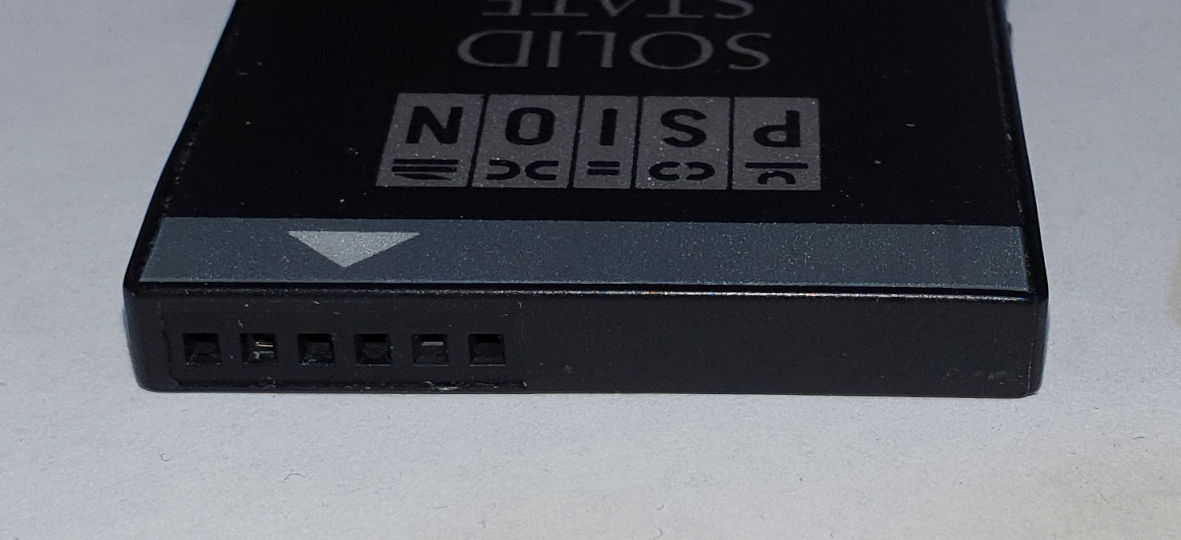
After the Datapak, Psion created a second proprietary memory card format for it’s next generations of hand held computers. The SSD (Solid State Disc) was used in their Series 3 line, the MC line and some of their industrial hand helds.
The format was less than half as thick, but almost twice the area of the Datapak. Again, there were battery-backed RAM cards, flash cards and ROM cards. There were no EPROM cards though, flash was by far the most common.
In modern flash devices, there is a controller chip that governs how data is stored. It allows the computer to see the storage as completely random access where bytes can be stored anywhere on the media. In a flash SSD the storage is not presented to the computer in this way.
Much like an EEPROM Datapak, data can only be written in blocks and and changes to any data in that block causes a new block to be created and the old one to be marked as overwritten. Unlike the Datapak, though, the data can be erased electronically by the Psion computer.
Sony Playstation Memory Card (1994)
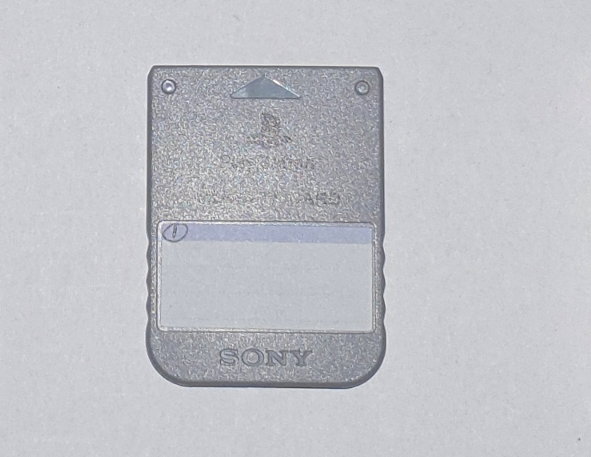
The Playstation and Playstation 2 from Sony played games from optical media. If you wanted to save your game progress to carry on from where you left off, you had to save it to a memory card. The card was of a proprietary format used only on those two consoles.
A memory card was a form of flash storage where data had to be stored in ‘blocks’; a game’s save data had to be a whole number of blocks in size. Saving progress was a function of the game and was different for each game and often only possible at a ‘save point’.
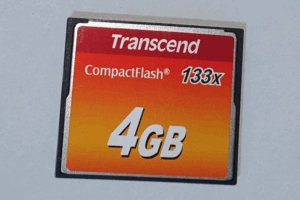
CF Memory Card (1994)
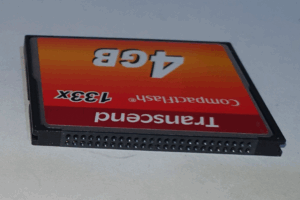
Compact Flash (commonly abbreviated to CF) was one of the most popular formats of memory cards. Many hand held devices had a CF card slot, and laptops that didn’t alternatively had a PCMCIA card slot. The cards are electrically compatible so an adapter was a cheap thing.
CF cards tended to be mainly for flash memory devices whereas PCMCIA cards were used for all sorts of hardware devices. There were WiFi and Bluetooth CF cards, but these came later.
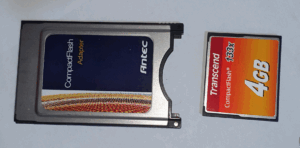
The CF format is still in use today, especially in high end digital cameras, although (according to Wikipedia) this is starting to decline now.
SD to CompactFlash adapters exist, and can be used in conjunction with a further adapter in order to use with the, now ubiquitous, microSD card.
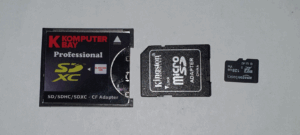
The CF (and PCMCIA) interface is also IDE compatible. IDE was the hard disk standard that came before SATA and became extremely popular. Because of its compatibility, a CF card with a cheap adapter is a perfect replacement for an ageing IDE disc. IDE discs are, of course, no longer being manufactured, and those that are left are becoming less reliable with age.
Iomega Zip (1994)
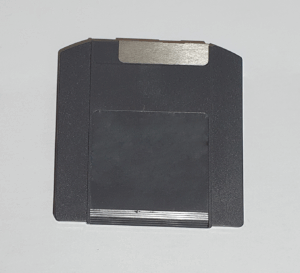
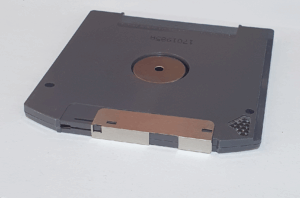
In the late 1990s Zip disks were everywhere. Drives were available for SCSI, IDE (or rather ATAPI), parallel printer port and, later in it’s life, USB. I’ve got a 100MB parallel port drive which I use on my Acorn Archimedes machines (A3010 and A4), and also a USB 250MB which I use on my Iyonix and my main Linux desktop machine. I only have 100MB disks, though.
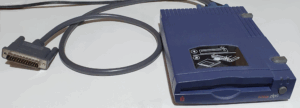
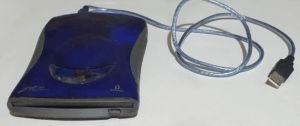
The Zip disk, itself, is only slightly bigger than a 3.5 inch floppy disk, but holds 100MB of data – a lot more that 1.44MB. Later disks held 250MB and 750MB – you needed a suitable drive, of course.
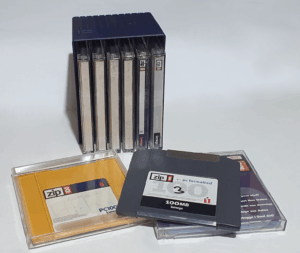
The technology used to move the heads is more like that in a hard disk than that in a floppy, employing voice coils rather than stepper motors, making Zip disks faster than floppies. Early, ageing drives tend to have a problem known as the ‘click of death’. This occurs when the heads don’t correctly track across the disk. This is often a catastrophic failure. Neither of my drives have done this (yet).
SmartMedia (1995)
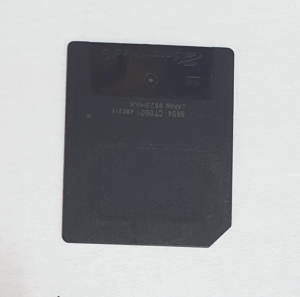
SmartMedia was another flash card format that was intended to compete with CompactFlash, although SD cards took the market by storm. The only use I ever saw was in my Olympus Camedia C-830L – an early digital camera. Wikipedia says it was also used in handheld devices.
Reading the data off one was often by USB or serial port card reader. As well as a ’12 in 1′ USB card reader, I also have a PCMCIA reader. The card reader only has 4 slots, so what the other 8 card formats are beats me.
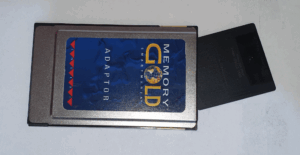
To my knowledge, the format was never very popular and many modern multi-card readers have dropped support for it.
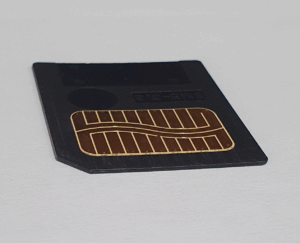
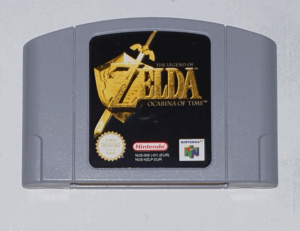
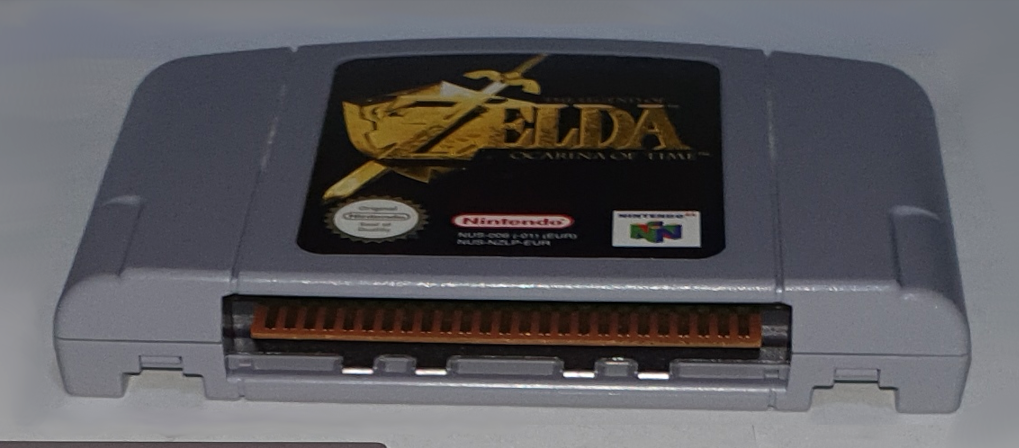
Nintendo 64 Cartridge (1996)
The Nintendo 64 was a popular games console. According to Wikipedia it was the last console to use cartridge based games. Game cartridges tended to have some kind of memory on board to save game progress.
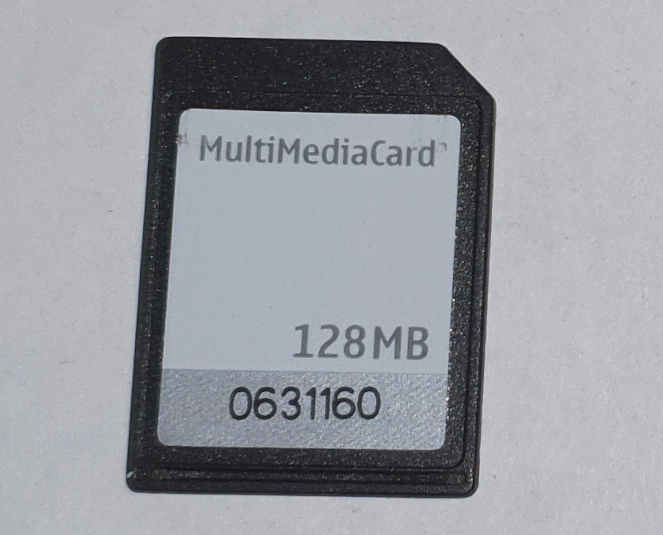
MMC Memory Card (1997)
The MultiMediaCard (MMC) was the predecessor to the SD card and is completely backward compatible, although it doesn’t have the tiny form factor of the microSD.
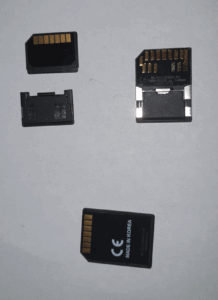
There were a few variations of MMC, the more popular being RS-MMC (Reduced Size), MMCplus and MMCmobile. The RS-MMC and MMCmobile were pin compatible with MMC and PPCplus respectively but about half the size – that half being the top half with the pins on it. In order to make them physically compatible, they came with extenders that clipped onto them.
Sony Memory Stick (1998)
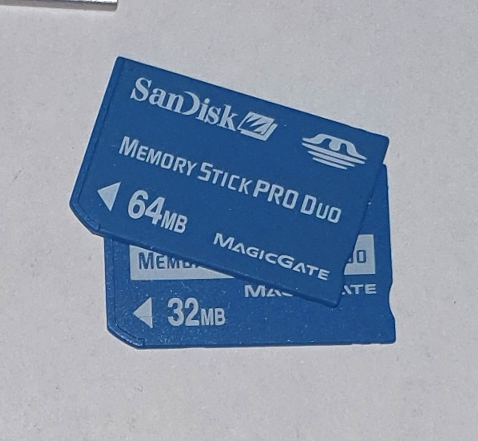
Sony invented many successful media formats like Video 8, Compact Cassette, 3.5 inch floppy disk and CD. Since there wasn’t a definitive standard in 1998 except CompactFlash, they thought they’d try to produce a much smaller format. It fared quite well in the market until the SD card came along.
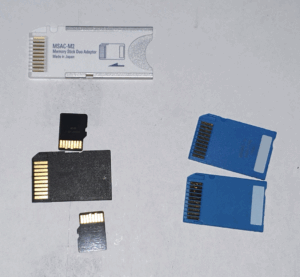
The original, full sized, MemoryStick was similar in size to a full sized SD card only about twice as long. After four years an SD card sized version, the MemoryStick Duo, was released. There is also the MemoryStick PRO and PRO Duo which have a higher capacity. An adapter exists to convert the Duos to the larger format. There is even an adapter for microSD cards.
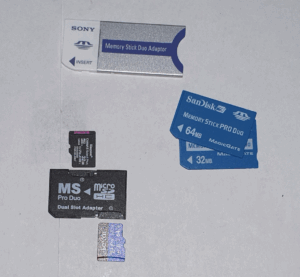
Sony licensed the format to a few companies in an effort to avoid the failure it had with Betamax (yes that was one of Sonys), but when the SD card came along it soon surpassed the memory stick in the marketplace.
Sega Dreamcast VMU (1998)
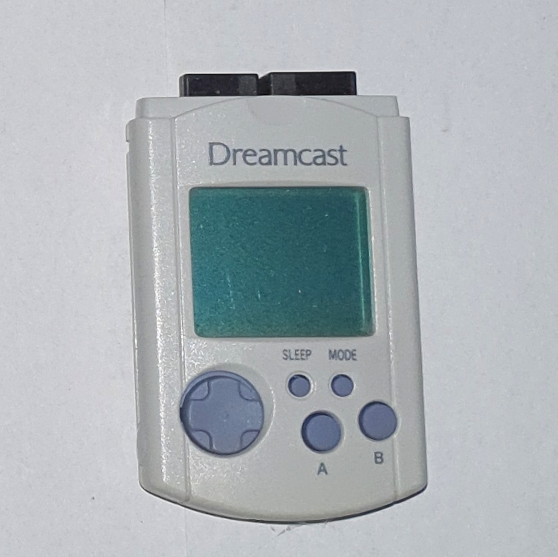
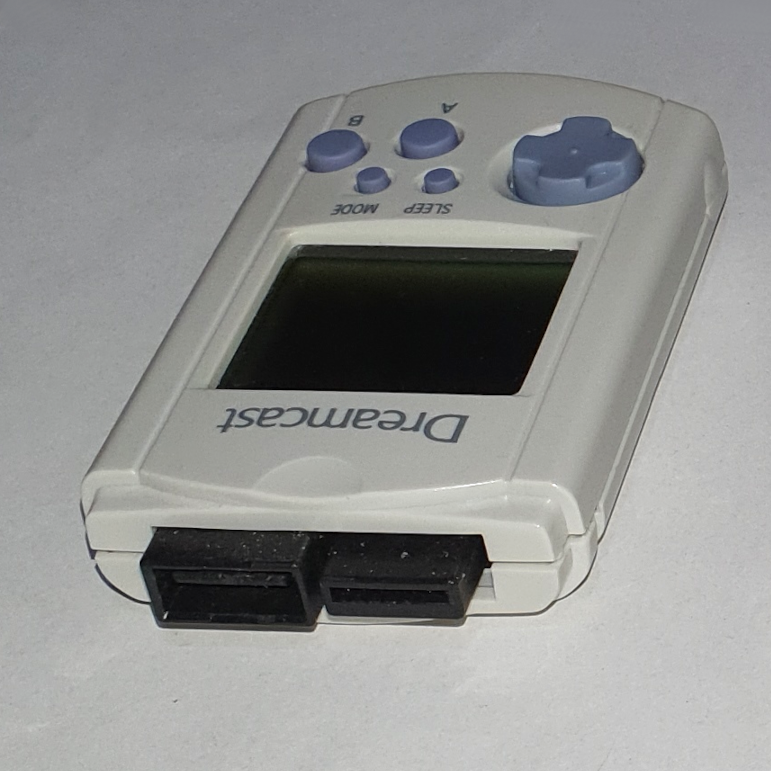
The Visual Memory Unit (VMU) was developed by Sega for use on their Dreamcast console. It not only has onboard flash memory, but is a small computer in its own right with a directional pad, a couple of buttons, and a monochrome screen.
During game play, the screen could be used by the game to display player stats or race maps or other subsidiary information.
The VMU’s could be linked together to transfer game data between them with no need for a console. They could even play mini-games.
Iomega Clik! (1999)
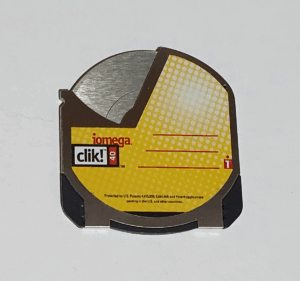
After their phenomenal success with Zip, Iomega released a much smaller media format – Clik! The smallest capacity Zip disk was 100MB, but being much smaller at about the size of a CompactFlash card, the Clik! disk only held 40MB. This might seem quite small compared to the CF card (which was typically 256MB in 1999), but the price was a fraction of what you’d pay for CompactFlash.
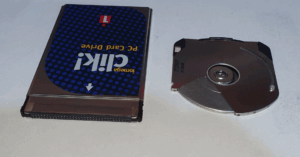
The media itself was read by a PCMCIA drive or a desktop drive. I suspect the same mechanism was used in all devices that read it.
I used to have an MP3 player that used the format and it was a little bigger than PCMCIA but much thicker. The desktop drive was apparently about the same size.
LGR has a video about it, including the Digital Camera Kit which has an independent CF to Clik! copier.
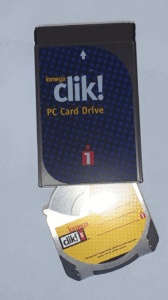
The format wasn’t ever very popular due to the number of flash formats on the market at the time and the fact that you had to buy an expensive drive to read the disks.
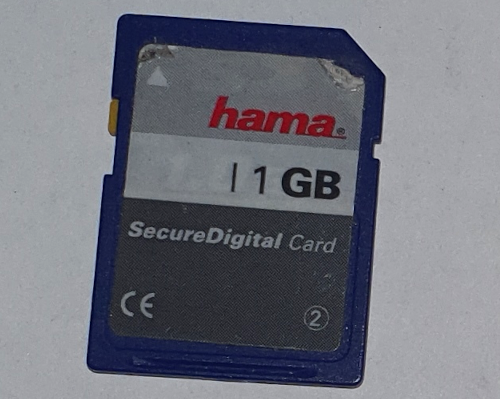
SD Memory Card (1999)
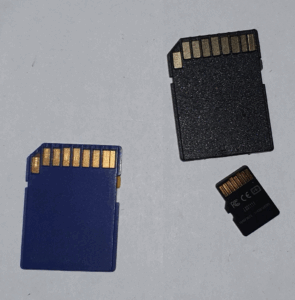
The original SD card format was created at the end of the last century, and its successor, microSD, is still going strong in 2025. The microSD card is incredibly tiny at about the size of a finger nail. Many purchases of microSD cards come with an adapter to the full size SD. I now have a large number of the things.
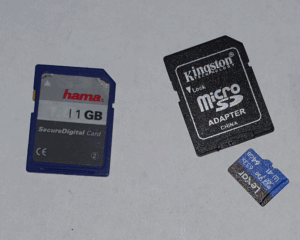
The first variant, the miniSD, was released in 2003, although I’d never heard of it until I read the Wikipedia article. This is not very surprising as the microSD was introduced only a year later.
In 2025, the microSD card is found in many smart phones (and everybody has a smart phone). Not all phones are expandable in this way, though, manufacturers favouring cheap onboard storage. If you want to use microSD to transfer data to a PC, you’ll need a USB card reader as you’ll not find many (if any) PCs with SD slots on them any more.
The first SD cards were 32MB and 64MB in size (although 64MB cards were very expensive). 128GB MicroSD cards are dirt cheap now, but if you can afford it you can even get 2TB cards.
The SD card format is a successor to the MMC (MultiMediaCard) which also did well. The full sized SD card is backward compatible with it, although MMC was never as small as microSD.
USB Flash Drive (2000)
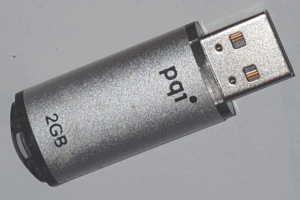
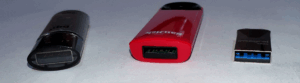
The USB flash drive is probably the most common modern format for portable storage. It had already been around for 25 years and has followed updates to the USB protocol standard and maintain backwards compatibility. Most drives plug into type-A ports, but there are drives with type-C connectors now.
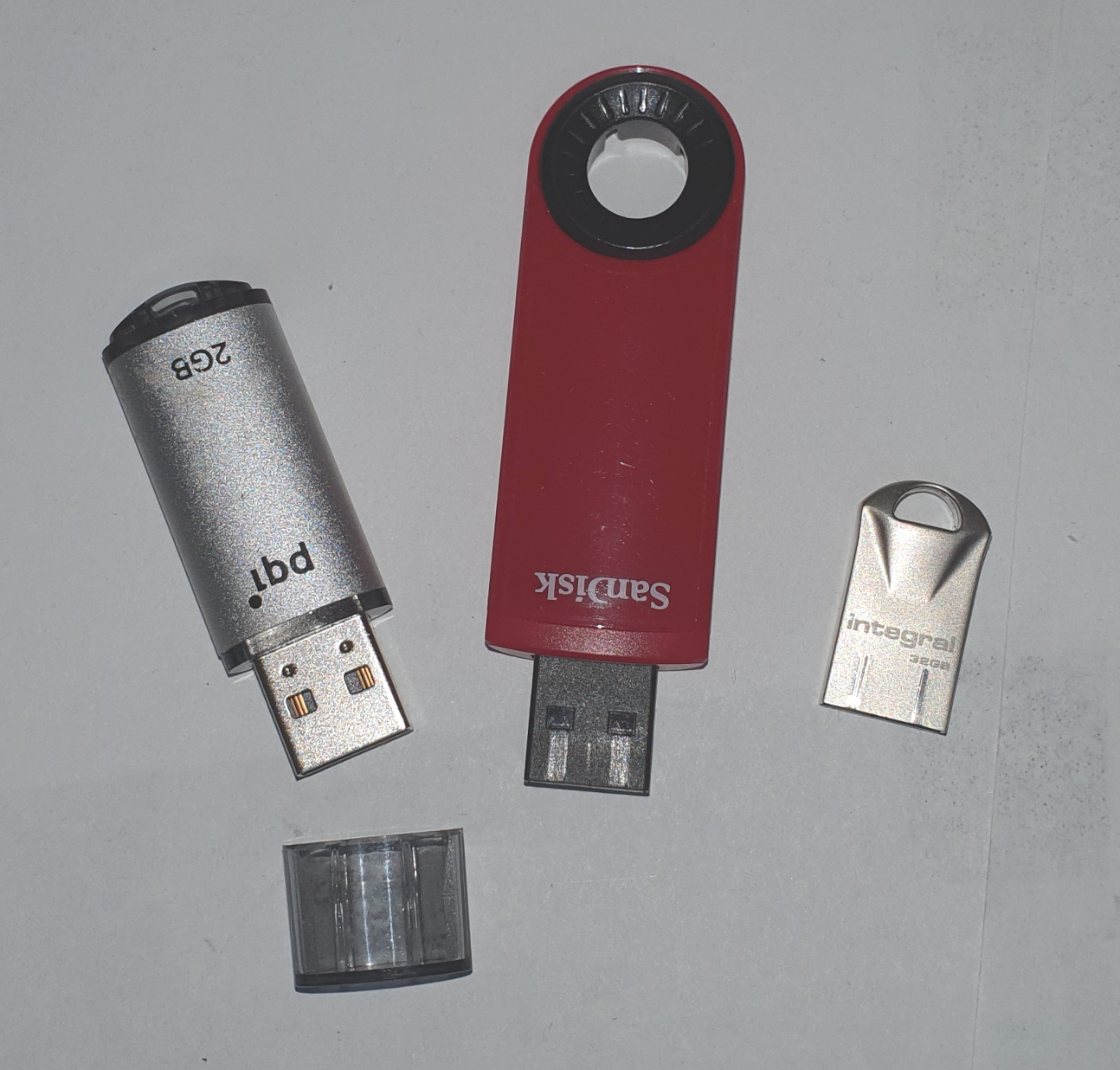
The USB standard has supplanted many of the other cable standards these days – serial ports and parallel printer ports have vanished from PCs. Many laptops don’t even feature card readers built in, but USB is always there. If you want to read any card format, you can probably find a USB reader for it. The only card format you might want to read, though, is microSD.
A modern USB drive can hold up to 4TB of data, although they are quite expensive. However, a 128GB drive costs very little.
xD Picture Card (2002)
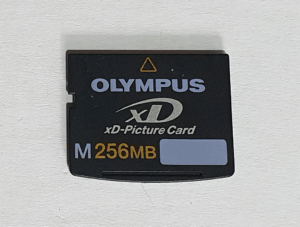
Olympus and Fujifilm released the xD Picture card in 2002 for use in their digital cameras. It competed with SD, CompactFlash and Sony’s Memory Stick losing mainly to SD. It was still in use until around 2010 when Olympus dropped it in favour of SD.
I only have one device which uses it, an Olympus µ1010 camera. The camera came with an adapter for microSD and so I never bothered with xD until I wrote this article. The adapter will only fit in certain cameras but not, for example, in a card reader
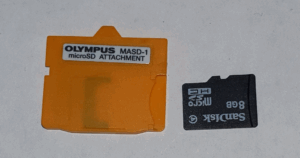
According to Wikipedia, the format is derived from SmartMedia, is proprietary to Olymus and FujiFilm and is therefore much more expensive than SD.
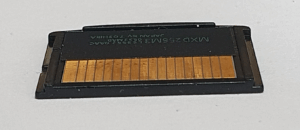
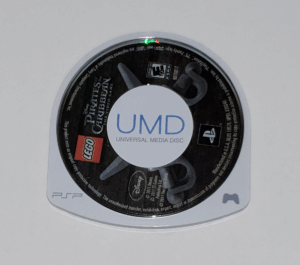
Sony UMD (2004)
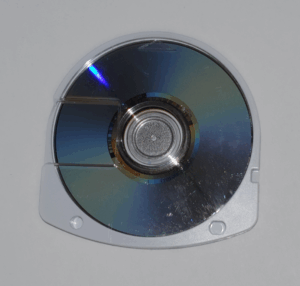
The Universal Media Disk (UMD) created by Sony is an small optical disk format, protected inside a hard plastic case. It was used in the Playstation Portable (PSP) hand held gaming console exclusively.
The disk can hold 1.8GB of data for games, films and music. According to Wikipedia, 1500 films were released on the format, along with TV series, and music. Of course, it was used primarily for games. Being read-only, game save data had to be stored elsewhere and that would be on Sony’s proprietary Memory Sticks.